Though solitary these bees also sometimes form loose communities with many nesting in one location. Despite the cultural and historical associations we have of bees and honey the honey bees represent a relatively small section of the over 20 000 species of bee the bees that live in the ground are mostly solitary unlike the large colonies of european honey bee.

Ground Nesting Bees Are They A Threat To You Or Your Lawn
Ground bees also called digger bees are mostly solitary bees that dig burrows in dry soil or bare turf.

Do honey bees burrow in the ground. It is way different than bumblebee who live in social colonies and be more aggressive than ground bees. Other times any sign of a mound may have disappeared. Ground bees dig tunnels or burrows in the ground.
Pour water directly onto existing burrows. Aerate the soil above and around the bees burrows with a heavy garden fork jabbing the fork straight down into the ground several times. Even though this bee is solitary meaning that every individual female builds her own nest it is also a gregarious nester photo 2.
You may notice a small pile of dirt up to 2 inches high where the bees have dug out tunnels underground. Be aware that bumblebees also nest in underground burrows although they typically use abandoned rodent burrows rather than excavate new ones. It is best to flood the bees during their dormant periods cool mornings and evenings.
Where do ground bees live. Though many of you will associate bees with hives filled with honey a majority of the thousands of bee species live in the ground. A tell tale sign of a ground bee s nest is small piles of dirt on your lawn.
Ground bees may look very much like honey bees but they are not in fact honey bees. By the way i went to scripture to see if ground bees are mentioned there at all. One of the most abundant ground nesting bees in northeastern and midwestern region of north america is colletes inaequalis photo 1.
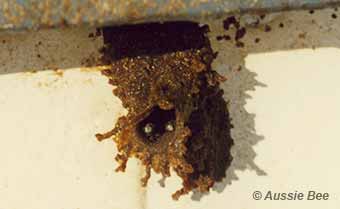
Nests of these bees are easy to identify above ground because of the conical piles of dirt with a large hole in the middle that serves as the entrance to the bee burrows photo 2. You might even see the entrance. Unlike ground bees bumblebees live in social colonies.
Some bumblebees build hives in abandoned rodent burrows or other larger holes but ground bees are typically a more solitary species hence their little holes. Though ground bees are solitary insects they like to dig burrow in the same area. I found that honey is said to be found in rocks psalm 81 16 in animal carcasses judges 14 8 and on the ground 1 samuel 14 25.
Soak the surrounding soil saturating the area where the burrow is located. Yellow jackets also have different character in building the nest they prefer old abandoned burrows. Always observe a bee s nest from a safe distance when you re trying to identify a species.
In other cases the bees will burrow down into the ground through bare patches in the lawn. Their burrows are often shallow only about 6 inches deep and leave mounds of disturbed soil on the surface. As you might already have guessed by the name ground bees live underground.
If activity is minimal restrict entry into the wall for approximately two more weeks and then plug the hole. A colony of bees can have between 20 000 to 100 000 bees living in it and there can be between 20 and 80 pounds of honeycomb in one beehive.
Advice On Bees In Houses
For example bumble bees typically will not nest in a wall cavity but often find suitable nesting in materials such as insulation foam pads and or seat cushions.

Bees nest in hole in wall. Bees are capable of entering holes as small as 120mm 3 16 inches in diameter. They have a reddish brown bottom and black body. It s no harder to fix a larger hole than a small one and your going to have more than enough material left over to do this right by opening up this hole much more toward the floor so you can clean this out before covering it back up.
Action will clearly be required where a dense aggregation of bees threatens the fabric of a building. Using a stethoscope you can listen to the wall to. Two weeks later remove the hive and close up the nest entrance.
How to get rid of bee s nest in house wall or yard naturally safely home bees how to get rid of bee s nest in house wall or yard naturally safely. This will save you a lot of time and effort in getting rid of your bees. Brick walls with openings or broken bricks provide adequate shelter for bee colonies.
Although bees are essential for the pollination of plants they can become a hazard when they decide to form colonies in populated areas. The sight of numerous nesting holes and large numbers of bees milling around a wall are the most obvious signs that action is required but excavated mortar and small flakes of newly broken off pieces of brick or stone on the ground below is a further indication. Jump to latest follow 1 16 of 16 posts.
Remove the trap and allow the bees in the decoy hive to go back in the building to retrieve their honey. Yellow jackets will build their paper nests in wall cavities holes in the ground or in the attic or crawlspace of your home. If you find that the beehive is underground you need to fill the hole with dirt.
Bees nest in wall. You ll see these small bees popping in and out of the wall or very small holes in the ground. In three to four weeks check for bees exiting the wall.
They nest in a wide range of cavities and have the ability to build nests by tunnelling through soft brick mortar or exploiting pre existing gaps left unrepaired.